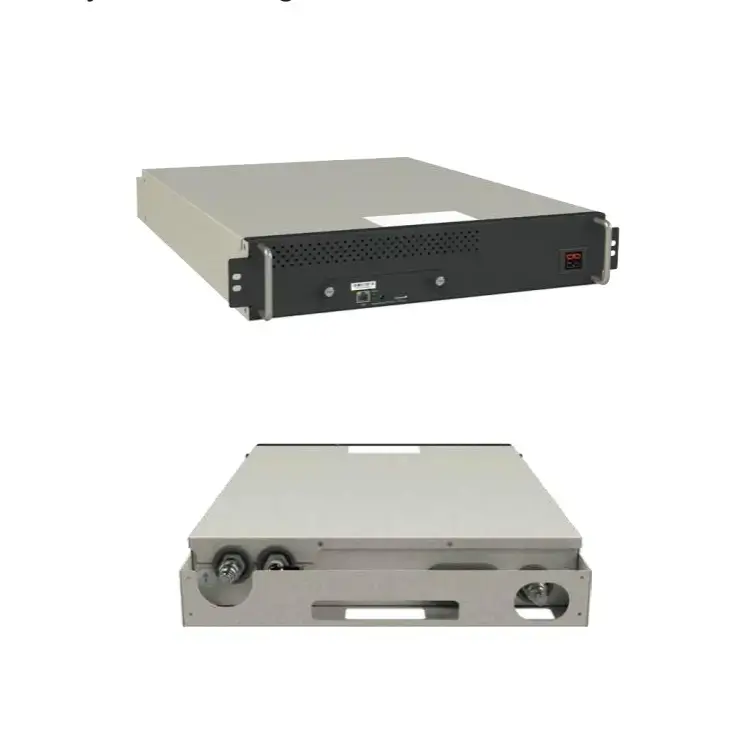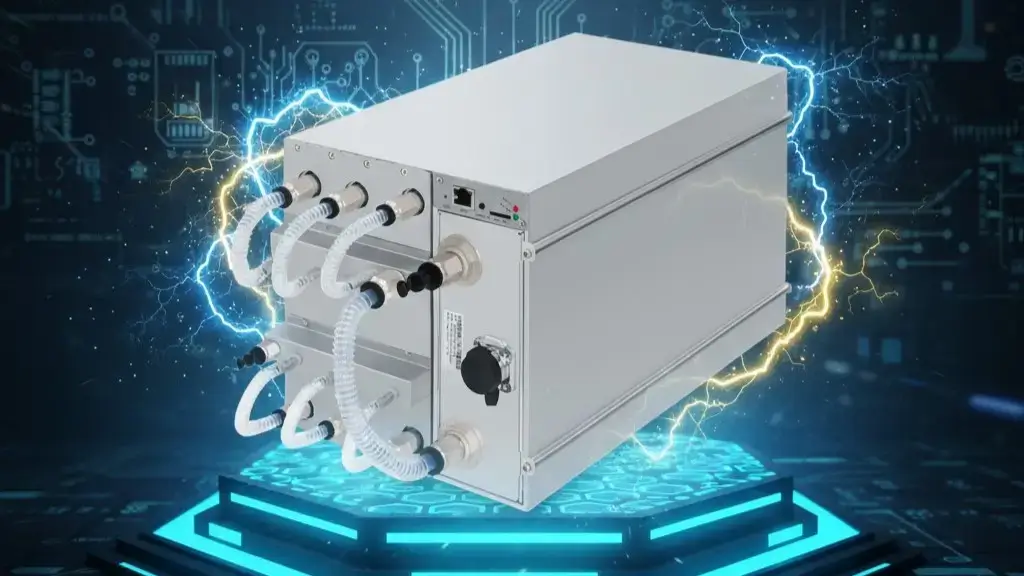
In the fast-paced world of cryptocurrency mining, choosing the right ASIC miner can make or break your operation. With Bitcoin’s halving events and fluctuating market prices, efficiency and performance are more critical than ever. Enter the hydro-cooled heavyweights from Bitmain: the Antminer S19 Hyd and the Antminer S21 Hyd. These liquid-cooled machines promise superior heat dissipation, lower noise levels, and potentially higher uptime compared to their air-cooled counterparts. But which one reigns supreme in 2025?
If you’re a miner looking to upgrade your rig or a newcomer dipping your toes into Bitcoin mining, this comparison will help you decide. We’ll dive into specs, performance, costs, and real-world profitability, all while keeping things realistic based on current market trends. By the end, you’ll have a clear picture of whether the tried-and-true S19 Hyd or the newer S21 Hyd fits your needs. Let’s break it down.
Understanding Hydro-Cooling in ASIC Miners
Before we compare the models, a quick primer on hydro-cooling. Unlike traditional air-cooled miners that rely on fans (which can be noisy and prone to dust buildup), hydro-cooled systems use liquid to transfer heat away from the chips. This results in better thermal management, allowing for higher overclocking potential and longer hardware lifespan. Both the S19 Hyd and S21 Hyd use this technology, but advancements in chip design give the S21 an edge in efficiency.
Hydro-cooling isn’t without its challenges— you’ll need a compatible cooling setup, like a closed-loop system or immersion tank, which adds to initial costs. However, for large-scale operations or hot climates, it’s a game-changer. Now, onto the miners themselves.
Overview of the Antminer S19 Hyd
The Antminer S19 Hyd series, launched around 2022, marked Bitmain’s foray into hydro-cooled mining for the masses. The most common variant discussed in 2025 is the S19 XP Hyd, which offers a balance of performance and affordability. Here’s a rundown of its key features:
- Hashrate: Up to 255 TH/s (terahashes per second), with some variants like the S19 Pro+ Hyd hitting 198 TH/s. This makes it capable of mining Bitcoin (SHA-256 algorithm) efficiently.
- Power Consumption: Around 5,304W, leading to an efficiency of about 20.8 J/TH (joules per terahash).
- Cooling: Hydro-cooling with inlet water temperatures between 20-40°C, requiring 8L/min water flow. It’s designed for easy integration into existing liquid cooling setups.
- Noise Level: Approximately 50 dB, quieter than air-cooled models but still audible in small spaces.
- Dimensions and Weight: Compact at 410 x 196 x 209 mm, weighing about 17.5 kg.
- Other Features: Supports 380-415V input, with built-in power supply and Ethernet connectivity for remote management.
The S19 Hyd has proven reliable in real-world scenarios, with many users reporting stable operation even in high-humidity environments. However, as Bitcoin’s network difficulty rises, its hashrate might feel dated compared to newer models.
Overview of the Antminer S21 Hyd
Released in late 2023 with batches still shipping into 2025, the Antminer S21 Hyd represents Bitmain’s latest advancements in ASIC technology. The standard S21 Hyd model boasts impressive specs, making it a favorite for professional miners.
- Hashrate: 335 TH/s, with XP variants reaching up to 473 TH/s. This is a significant jump over the S19 series.
- Power Consumption: 5,360W, achieving an efficiency of 16 J/TH—about 20% better than the S19 Hyd.
- Cooling: Advanced hydro system with deionized or pure water requirements (pH 8.5-9.5), supporting water pressures up to 3.5 bar.
- Noise Level: 50 dB, similar to the S19 but often perceived as quieter due to optimized design.
- Dimensions and Weight: Slightly slimmer at around 410 x 170 x 209 mm, weighing 12.3 kg—easier to handle and stack.
- Other Features: 3-phase power input (380-415V), improved firmware for overclocking, and better heat tolerance.
The S21 Hyd shines in energy-conscious setups, where its lower J/TH ratio translates to more hashes per watt. Users on forums like Reddit praise its stability post-halving, though some note higher upfront costs.
Head-to-Head Comparison
To make things clear, let’s compare the core specs side by side. We’ll use the S19 XP Hyd (255 TH/s) and S21 Hyd (335 TH/s) as benchmarks, as they’re the most directly comparable in 2025 markets.
| Feature | Antminer S19 Hyd (XP Variant) | Antminer S21 Hyd |
|---|---|---|
| Hashrate | 255 TH/s | 335 TH/s |
| Power Consumption | 5,304W | 5,360W |
| Efficiency | ~20.8 J/TH | 16 J/TH |
| Cooling Type | Hydro (water flow 8L/min) | Hydro (advanced, pH-specific) |
| Noise Level | 50 dB | 50 dB |
| Weight | 17.5 kg | 12.3 kg |
| Price (2025 Est.) | $2,500 – $2,800 | $4,000 – $5,000 |
| Release Year | 2022 | 2023/2024 |
Hashrate and Performance
The S21 Hyd pulls ahead with 31% more hashrate at similar power draw. In practice, this means faster block solving and higher daily outputs. For instance, under identical conditions, the S21 could mine about 1.3x more Bitcoin than the S19.
Power Efficiency
Efficiency is where the S21 truly excels. At 16 J/TH vs. the S19’s 20.8 J/TH, you’ll save on electricity bills—crucial in 2025 with rising energy costs. If you’re paying $0.05/kWh, the S21 could net 15-20% more profit per unit.
Cooling and Durability
Both use hydro-cooling, but the S21’s refined system handles higher loads better, reducing thermal throttling. Users report the S21 lasts longer in continuous operation, with fewer failures. The S19, however, is battle-tested with years of market presence.
Price and Availability
In 2025, used S19 Hyd units are plentiful and cheaper, starting at around $2,500. New S21 Hyd models command a premium, often $4,000+, due to demand. If budget is tight, the S19 offers better entry-level value.
Profitability Analysis in 2025
Profitability hinges on Bitcoin price, network difficulty, and electricity costs. As of October 2025, with BTC around $100,000 (based on recent trends) and difficulty at all-time highs, let’s crunch the numbers using standard calculators.
Assuming $0.05/kWh electricity:
- S19 XP Hyd (255 TH/s): Daily revenue ~$11.95, minus ~$6.37 in power = ~$5.58 net profit. Monthly: ~$167. ROI in 15-18 months at current prices.
- S21 Hyd (335 TH/s): Daily revenue ~$17.05, minus ~$6.43 in power = ~$10.62 net profit. Monthly: ~$319. ROI in 12-15 months.
Post-halving, the S21’s efficiency gives it a clear advantage. If electricity is cheaper (e.g., $0.03/kWh), profits soar for both, but the S21 scales better in large farms. Always use tools like NiceHash or WhatToMine for personalized calculations.
Pros and Cons
Antminer S19 Hyd Pros:
- Affordable entry point.
- Proven reliability.
- Easier to find parts and support.
Cons:
- Lower efficiency leads to higher long-term costs.
- Dated hashrate in competitive networks.
Antminer S21 Hyd Pros:
- Superior efficiency and hashrate.
- Future-proof for upcoming halvings.
- Lighter and more compact.
Cons:
- Higher initial investment.
- Requires precise cooling setup.
Which One is Better?
It depends on your setup. For budget-conscious hobbyists or small operations, the Antminer S19 Hyd is still a solid choice—it’s cheaper and gets the job done without bells and whistles. However, if you’re scaling up or prioritizing efficiency in 2025’s tough mining landscape, the Antminer S21 Hyd is the better investment. Its higher hashrate and lower J/TH ratio mean quicker ROI and better resilience to market dips.
Ultimately, factor in your electricity rates, scale, and risk tolerance. Consult mining communities on Reddit or Bitcointalk for user experiences, and always buy from reputable sellers to avoid scams.
In conclusion, while the S19 Hyd holds its ground as a reliable workhorse, the S21 Hyd edges it out as the superior option for most miners in 2025. Whichever you choose, happy mining—may your blocks be plentiful!